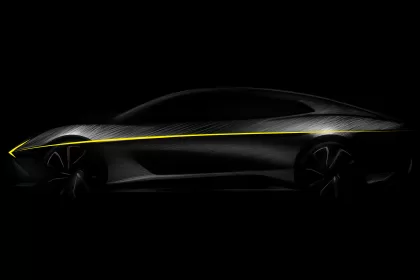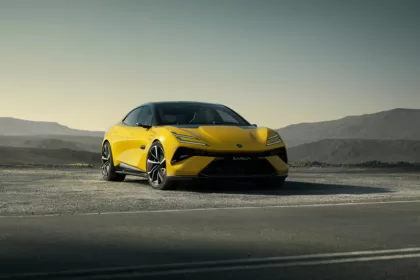






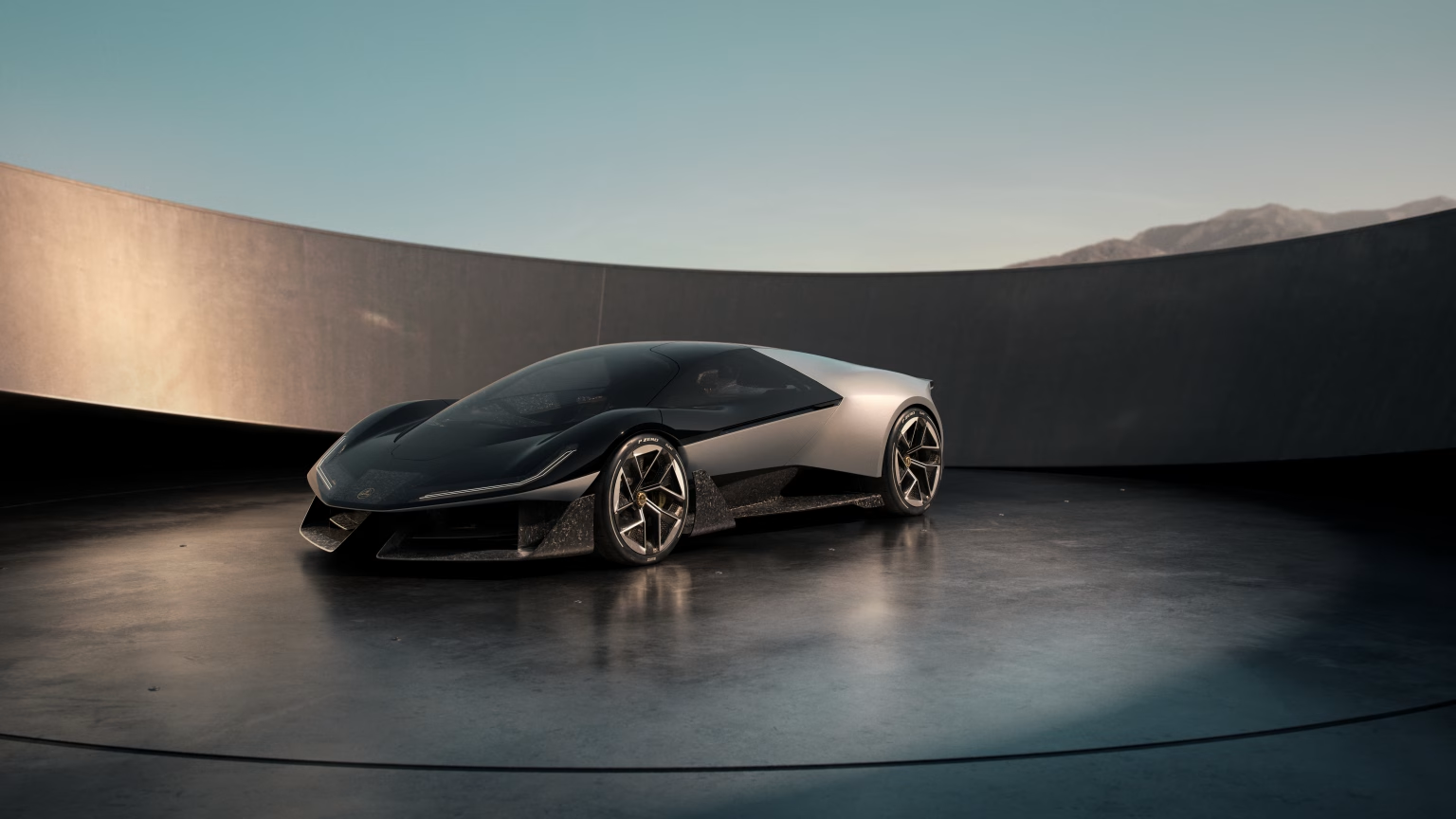
Lotus has unveiled Theory 1, its first concept car that embodies the future of intelligent performance vehicles.
As part of this, Lotus is launching The Lotus Theory, the company’s new design manifesto that will form the foundation for all future Lotus cars, encapsulated through three core principles – Digital, Natural and Analogue (DNA):
- Digital, which represents the immersive, intelligent, and intuitive experience.
- Natural, brings to life emotional, connected, human-centric design.
- Analogue, which is the brand’s continuous advancement of performance engineering.
By seamlessly blending together these core design principles with the latest design innovations from Lotus, as well as cutting-edge technologies, Lotus is able to simplify and enhance how a car should feel and perform. Theory 1 harmoniously fits around the driver and is able to adapt based on their needs – delivering the ultimate driver experience.
Ben Payne, Vice President of Design, Lotus Group said:
“With Theory 1, we’ve built on everything Lotus has achieved so far in its 76-year history, to push the boundaries for what it means to drive a performance vehicle. We want to demonstrate that you don’t need to compromise – with both digital and analogue capabilities working harmoniously in the future car. In doing this, we are able to bring drivers the best possible immersive driving experience with raw emotion, functionality and connectivity, at the core.”
Theory 1 reaffirms the company’s Vision80 commitment – a transformation into a global performance technology brand. The innovations announced today are expected to be implemented into future Lotus cars in the coming years.
The ultimate immersive and intuitive driver system with LOTUSWEAR™
Lotus has developed its own proprietary driver system called LOTUSWEAR™, which is an immersive system that aims to deliver a personalised experience to every occupant in the car, designed to evoke a sense of raw emotion and pure excitement – and further connect them to the road.
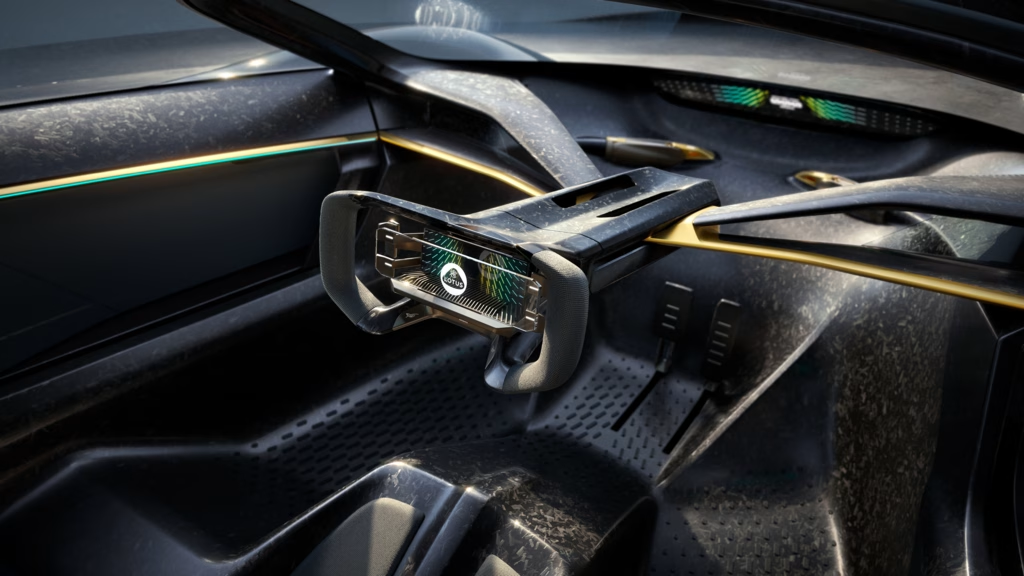
This features an adaptive soft and lightweight robotic textile material, seamlessly enabling the car to communicate with the driver and passengers and offer a more intuitive and comfortable in-car experience. It aims to do this through inflatable pods on the seating and steering wheel that will react in real time to offer more support, grip, and subtle prompts via personalised haptic feedback. For instance:
- Pulses on the left and right sides of the wheel will indicate when the driver should make a turn
- There are five drive modes: Range, Tour, Sport, Individual and Track, delivering comfort and enhancing the driver experience & dynamic ability, as well as constantly adapting to the driver’s surrounding environment. This aims to optimise efficiency, performance, and comfort in any environment.
This component has been created in collaboration with MotorSkins, a startup that specialises in textile-based wearable robotics for every-day use. Theory 1 demonstrates the first time it is being used in the automotive industry.
In addition, LOTUSWEAR™ features 3D printed lattice structure headrests made in partnership with global 3D printing technology company Carbon, to offer all occupants in the car maximum comfort, whilst reducing the weight, improving material efficiency, and optimising aerodynamics.
To ensure every occupant can enjoy a truly immersive and unique audio experience, part of the headrest is a binaural audio system, which has been designed in collaboration with KEF. It offers individual bespoke soundscapes for each of the occupants, that are further enhanced by the subwoofer speaker located behind the driver seat. Occupants in the car can:
- Enhance ‘speed’ sounds to deliver a sense of thrill, exhilaration, and fun.
- Benefit from noise cancelling abilities to improve concentration and enhance the listening experience.
- Level-up entertainment by providing an impeccable and immersive sound to further elevate the audio experience.
It uses binaural audio technology to do this, which enables channel separation of the sound arriving at each ear – delivering a full-bodied audio experience that feels as if the occupant is sitting in the middle of a recording studio.
Part of the proprietary driving system is the LOTUSWEAR™ Technology Line – a functional technology band running inside and outside of the car, acting as a communication device. It includes:
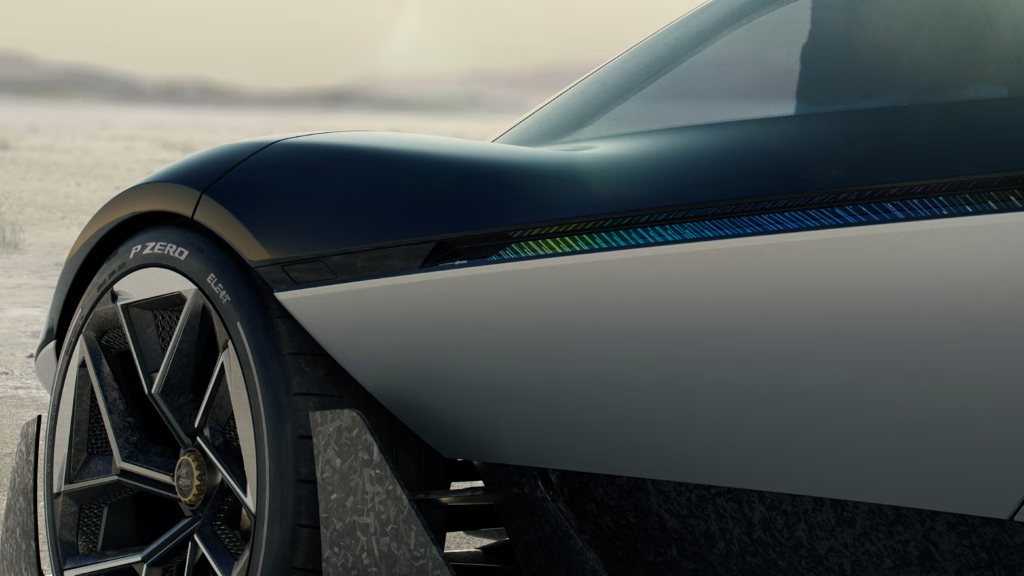
- Integrated OLED technology to display multiple functions of the vehicle status to the driver and occupants, as well as other road users and pedestrians e.g. detecting the presence of an object or person close to the vehicle.
- Lotus’ 360-degree autonomous driving sensor suite. The fully embedded L4 hardware capability consists of four deployable LiDARs, six HD cameras, and a combination of long- and short-range millimeter radars, plus ultrasonic radars, delivering 360° (5x) perception coverage. This ensures driver confidence by scanning for obstacles at a radius of up to 200m around the car, in every direction, even in low light or inclement weather.
The LOTUSWEAR™ technology line is built on the high-performance NVIDIA DRIVE compute platform – enabling redundant and diverse real-time sensor processing at trillions of operations per second for greater safety and enhancing the vehicle’s capabilities through advanced digitalization and adaptive parameters for optimum driving dynamics.
The LOTUSWEAR™ Technology Line is a homage to the purely functional joining “band” on the Lotus Esprit. It is also an evolution of the line of technology that Eletre and Emeya have within their interior architectures. By grouping the technology all in a singular line throughout the vehicle, Lotus aims to keep the design as minimal and harmonious as possible – a progressive expression of its technology DNA.
A new benchmark for user experience
Theory 1 seamlessly integrates projections, screens, and haptics, with Lotus’ new design manifesto to create a borderless user experience and provide the driver with information quickly and easily through:
- Analogue interactive components and notifications via the adaptive inflatable soft textile material by MotorSkins.
- A digital system that uses intelligent environmental light, LED and laser-light components, and reflections on the windscreen to communicate information with the driver, such as obstacle detection, braking, turns and more.
- Two laser lights on the dashboard wings to indicate left and right turns, working in harmony with the haptic inflation materials on the seats.
- Additional RGB LEDs on the suspension modules, which are visible from the interior, and have green or red signals, depending on the need for braking or acceleration.
- Clear, functional, 2D graphics to display the main data on the steering wheel, ERMDs, and heads-up display. This has been designed with simplicity at the core, using the minimum amounts of fonts and graphic elements.
- Immersive 3D graphics, where a grid of points evolve into lines that change length, colour and direction according to vehicle speed, braking, turning, and drive modes – a homage to the Arte Programmata movement from the 60s.
These key features enable the driver to enhance their use of peripheral vision, meaning they do not need to take their eyes off the road. In doing this, Lotus designed a fluid and intuitive experience for the drivers, so they can focus more on driving, minimizing distractions and further enhancing safety.
A holistic design approach, with minimal materiality and true innovation
With current cars made of an average of 100 A-surface materials, as a concrete action to a more sustainable future and circular economy, Lotus started from scratch to build a car with as few materials as possible.
As a result, the ‘Challenge of 10’ was created, and it is Lotus’ intention and ambition to push the automotive industry forward, demonstrating the company’s north star for future material innovation.
Theory 1 has been designed with only ten main A-surface materials with performance, durability, lightweight, recycled, and recyclable properties. This includes the use of cellulose based glass fibre, recycled chopped carbon fibre, titanium, recycled glazing, recycled polyester, recycled rubber, elastomeric Polyurethane, transparent polycarbonate, thermoplastic polyurethane, and recycled aluminum.
The Challenge of 10 demonstrates Lotus’ commitment to pure minimalism, which is a nod back to Lotus’ simplicity of construction and lightweight principles of the company’s heritage vehicles.
This philosophy is also demonstrated in the LOTUSWEAR™ driver system with the soft robotic fabrics in collaboration with MotorSkins, as well as 3D printed lattice structure headrests in partnership with Carbon.
In addition, Lotus has tapped into global electronics manufacturer Kyocera SLD Laser, Inc., a Kyocera group company, to deliver industry-leading laser lights in both the interior and exterior, in order to deliver a safe, powerful, and advanced lighting system, whilst drastically reducing component size and weight. This includes ‘Next Generation’ laser wire DRL functions, which are less than a millimeter in diameter, and main and dipped-beam functions which are delivered through lenses of 7x35mm.
With these principles as the foundation of Lotus design DNA, the company’s intent is to enhance the performance of its cars in line with racing principles, which Lotus was renowned for. Its aim is also to make performance cars more accessible by simplifying the design and technology, making it as easy as possible for anyone to use.
Enhancing dynamic performance, handling, and speed
Theory 1 extends Lotus’ expertise in engineering to bring drivers an electric car that performs exceptionally and unlocks driver confidence by making the experience as fun and engaging as possible.
This includes advanced active and passive aerodynamic techniques including cooling, active rear spoiler, and passive rear underbody. All of this, along with the low centre of gravity, enhances stability and increases the lightness of the vehicle.
Theory 1 seamlessly integrates advanced aero and cooling systems, which are designed to work in harmony and increase efficiency. This includes:
- The nose cone on the vehicle has diffuser and drag-reducing air deflectors, with an air curtain that minimises the car’s wake. This has been inspired by Lotus’ racing heritage.
- A contoured underfloor which directs air through low drag NACA ducts into the cooling system, and outlets creating a blown air foil reducing separation, as well as enabling more powerful force.
- Side pods in the vehicle which have been meticulously designed to isolate turbulent wake from the attached airflow, guiding it towards the rear.
In addition, inspired by the revolutionary Lotus 49 Formula 1 car, Theory 1 has been designed to use its motor and battery assembly as a stressed member to take the forces directly from the suspension – reducing complexity and weight, with no need for a subframe.
The rear wing has also been mounted directly to the motor and suspension assembly to ensure the downforce acts directly on the suspension mounts, all the way through to the tyres – reducing losses and frontal lift. The rear suspension system also features a pull rod design, which delivers a more compact package and lower centre of gravity.
The ultimate advanced dynamic architecture, delivering a state-of-the-art and seamless experience
Lotus has developed a proprietary sports car door system that enables all occupants with easy ‘step-in’ access to the car with its reverse opening and wrap-over design. With this, Lotus has been able to achieve the smallest footprint it can with the doors opened, allowing for practical use of doors even in narrow spaces. For instance, if a car is parked in a tight car park with a 2.4-meter space, the driver will still be able to get in and out of the vehicle with ease. This has previously been a challenge with similar high-performance sports cars.
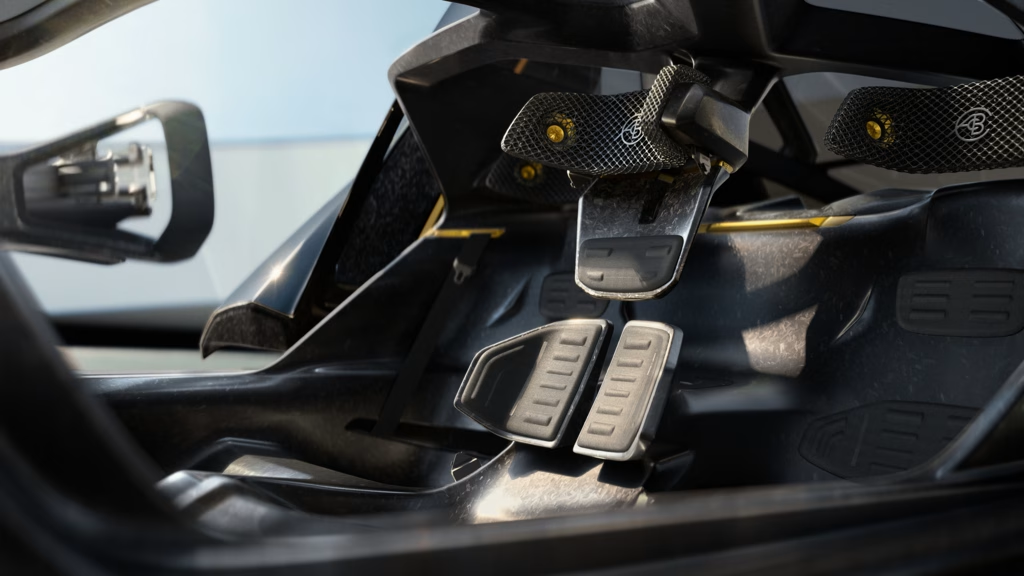
Furthermore, Theory 1 is a three-seater sports car which has a central driving position, with a passenger on each side, nestled behind the driver. Inspired by motorsports, the driver’s seat in the middle of the car provides the driver with the best possible visibility of the road ahead, as well as easy access to all controls.
The inside of the vehicle structure has also been shaped around the human body, with the seating integrated into the structure. Lotus has designed the car, to respond to the occupant’s body. For instance, the steering wheel and pedals all move towards the driver.
The car also features steer-by-wire, which enables precision and control at every turn and the ability to adjust steering ratios, speed and feel. This is designed to deliver precision and the smoothest ride, further enhancing driver confidence, and connecting them to the road.
The pinnacle driving experience, powered by the Lotus DNA
Theory 1 features bespoke Pirelli tyres belonging to the P Zero family, Pirelli’s Ultra High-Performance (UHP) range. These have been developed specifically to enhance the vehicle’s performance, with particular attention to limit the environmental impact, and include Elect – Pirelli’s most advanced set of technologies developed to emphasize the characteristics of electric cars.
Pirelli Elect tyres have a structure and materials that support the weight and the high torque typical of vehicles with electric powertrains, providing longer durability, less tyre wear, and optimising battery range. These tyres are present today in the company’s electric vehicles including its hyper-SUV, Eletre; hyper-GT, Emeya; and hypercar Evija.
The car also details the latest advanced performance braking systems from AP Racing, who Lotus has had a long-standing relationship with. It goes all the way back to the 1967 Lotus 49 and AP Racing today provides the brake systems in Lotus’ current product lineup including Evija, Eletre and Emeya. Theory 1 features a super lightweight, high performance carbon ceramic braking system, with near-net Monoblock aluminum forged body with asymmetric design – reducing material where not needed.
Target technical specifications
| Powertrain and Performance | |
| Category | Theory 1 |
| Battery capacity | 70 kWh |
| 0-100 km/h (0-62 mph) | <2.5 seconds |
| Max power | 1000 PS |
| Top speed | 320 kph |
| WLTP combined range | 402 km / 250 miles |
| Drivetrain | AWD |
| Dimensions | |
| Category | Theory 1 |
| Height | 1140 mm |
| Length | 4490 mm |
| Width (including cameras) | 2000 mm |
| Width (excluding cameras) | 2000 mm |
| Wheelbase | 2650 mm |
| Front track | 1720 mm |
| Rear track | 1700 mm |
| Front overhang | 1052 mm |
| Rear overhang | 790 mm |
| Weight | <1600 kg |
| Body and Chassis | |
| Category | Theory 1 |
| Tub | Recycled chop carbon fiber |
| Body | Cellulose composite and polycarbonate |
| Greenhouse | Recycled glass |
| Steering and Suspension | |
| Category | Theory 1 |
| Steering | Steer by wire |
| Suspension type | Front and read double wishbone |
| Damping system | Active |
| Wheels and Brakes | |
| Category | Theory 1 |
| Tyres – front | Pirelli P-ZERO Elect – 265/35 R20 |
| Tyres- rear | Pirelli P- ZERO Elect – 325/30 R21 |
| Rims – front | 20 X 9.5J |
| Rims – rear | 21 X 11.5J |
| Brakes | AP Racing 6 piston calipersNear-net Monoblock forged |
| Front discs | 390 x 36 mm |
| Rear discs | 390 x 36mm |